Introduction: The Day Two Pans Gave Two Different Dinners
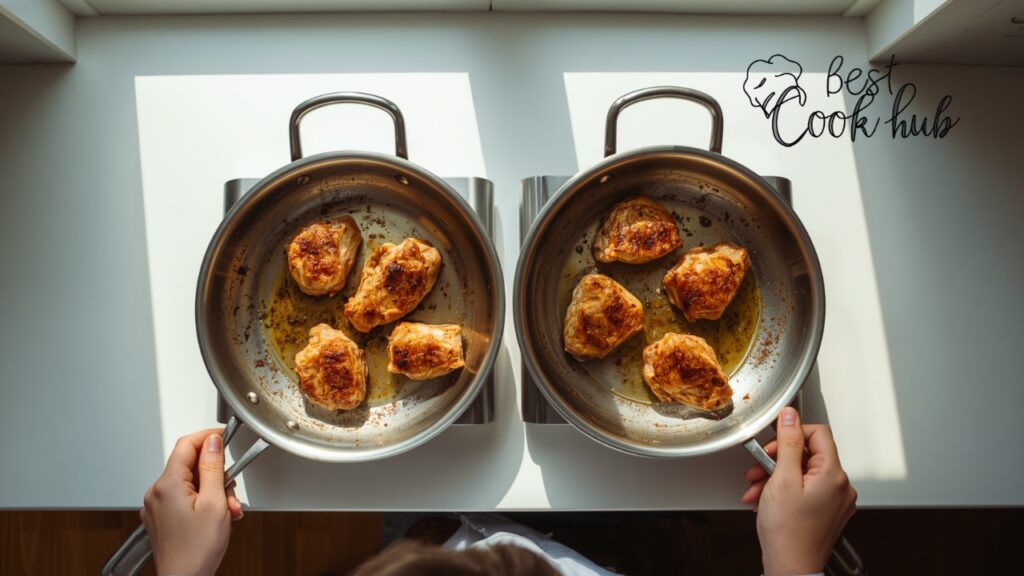
I remember when I cooked the same chicken recipe in two different stainless steel pans. One was a basic stainless steel pan, and the other was a tri ply stainless steel pan with an aluminum core.
The recipe was simple: chicken breast, salt, black pepper, garlic, butter, and lemon. Nothing fancy, right?
But the results were not the same. The regular stainless steel pan browned the chicken more in the center, while the edges looked pale.
The tri ply stainless steel pan gave a more even golden crust. The sauce also came together better because the browned bits on the bottom were more balanced.
Have you ever cooked something and wondered, “Why is one side burning while the other side is barely cooking?” That is often not your fault.
In my years of experience, I’ve seen many people struggle with stainless steel cookware because they do not understand the difference between normal stainless steel and tri ply stainless steel. They buy a shiny pan, expect restaurant-style results, then feel disappointed when food sticks or burns unevenly.
This guide will make the difference simple. By the end, you will know what tri ply stainless steel is, what regular stainless steel is, how they perform, which one is better for your cooking style, and how to use both with confidence.
What Is Stainless Steel Cookware?
Stainless steel cookware is made from steel mixed with chromium and often nickel. This combination makes the metal more resistant to rust, stains, and corrosion.
That is why stainless steel is so popular in kitchens. It is strong, shiny, long-lasting, and safe for many types of cooking.
Regular stainless steel cookware may be made from a single stainless steel layer or from stainless steel with a bonded base. Some cheaper stainless steel pans only have a disc of aluminum attached to the bottom.
Have you ever seen a stainless steel pot with a thick base but thin sidewalls? That is often a disc-bottom design.
Stainless steel itself is durable and non-reactive. That means it can handle acidic foods like tomato sauce, vinegar, lemon juice, and wine without changing the flavor.
But stainless steel has one weakness. It does not conduct heat as well as aluminum or copper.
What Is Tri Ply Stainless Steel Cookware?
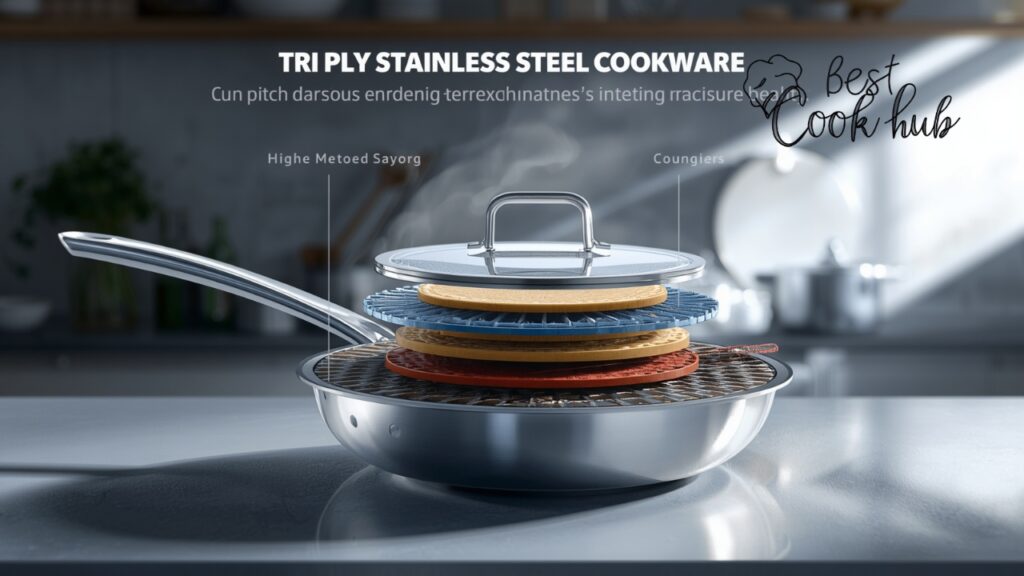
Tri ply stainless steel cookware is made from three bonded layers of metal. The most common structure is stainless steel on the inside, aluminum in the middle, and stainless steel on the outside.
The inside stainless steel layer touches your food. It gives you a safe, durable, non-reactive cooking surface.
The middle aluminum layer spreads heat quickly and evenly. This helps reduce hot spots and makes cooking more predictable.
The outside stainless steel layer adds strength and often makes the cookware induction compatible if magnetic stainless steel is used.
So, when you see terms like “tri ply cookware,” “3 ply stainless steel cookware,” “triply stainless steel,” or “clad stainless steel,” they usually refer to this layered construction.
The Main Difference in Simple Words
The biggest difference is heat performance. Regular stainless steel is durable, but tri ply stainless steel heats more evenly because it has an aluminum core.
Think of regular stainless steel as a strong shield. It protects, lasts long, and handles tough cooking.
Think of tri ply stainless steel as that same shield with a heat-spreading engine inside. It gives durability plus better cooking control.
Does that mean regular stainless steel is useless? Not at all.
Regular stainless steel can be great for boiling, steaming, simmering, and basic cooking. But for searing, sautéing, browning, and sauce-making, tri ply cookware usually performs better.
The Data Behind the Difference
Here is the simple science. Aluminum conducts heat much faster than stainless steel.
A common engineering reference lists aluminum around 215 W/m·K for thermal conductivity, while stainless steel is around 17 W/m·K. That means aluminum moves heat far more efficiently.
What does that mean in your kitchen? It means the aluminum core inside tri ply stainless steel helps spread heat across the pan instead of keeping it concentrated in one hot spot.
Have you ever cooked pancakes where the center browned too fast and the outer edges stayed pale? That is a heat distribution problem.
Tri ply stainless steel helps reduce that issue. It does not make you a perfect cook automatically, but it gives you a better cooking surface to work with.
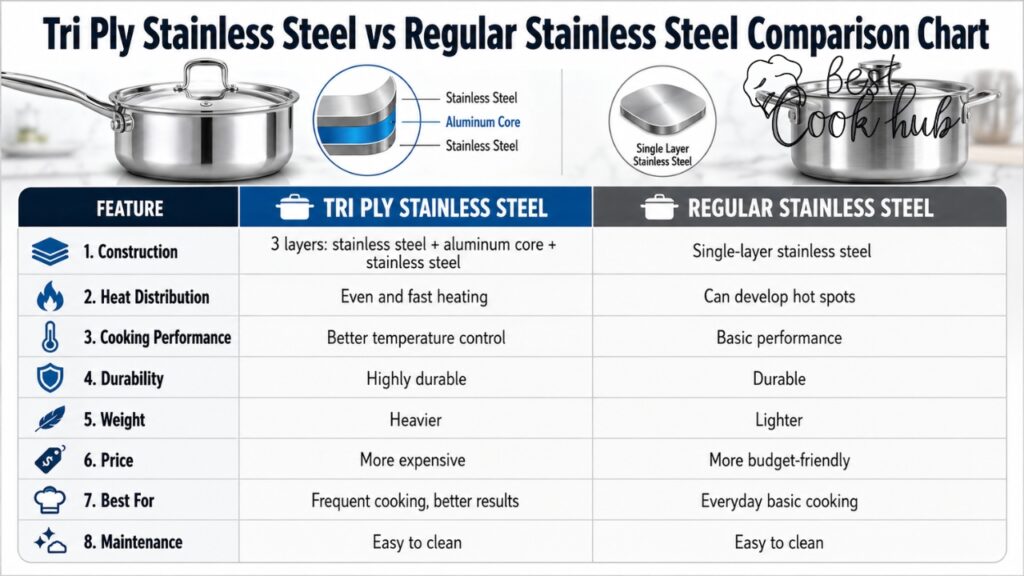
Tri Ply Stainless Steel vs Stainless Steel: Quick Comparison Table
| Feature | Tri Ply Stainless Steel | Regular Stainless Steel |
| Structure | Three bonded layers, usually stainless-aluminum-stainless | Single layer or stainless with attached base |
| Heat Distribution | More even due to aluminum core | Can be uneven, especially in thin pans |
| Hot Spots | Fewer hot spots | More likely in cheaper pans |
| Durability | Very durable | Durable, but quality varies |
| Food Reactivity | Non-reactive cooking surface | Non-reactive cooking surface |
| Searing | Excellent | Good if thick and well-made |
| Sauce Making | Excellent | Good, but may scorch in hot spots |
| Weight | Medium | Light to medium |
| Price | Usually higher | Usually cheaper |
| Best For | Searing, sautéing, sauces, everyday cooking | Boiling, steaming, simple cooking |
| Induction Use | Often compatible | Depends on outer steel type |
| Beginner Friendly | Yes, with basic technique | Yes, but performance varies |
Why Heat Distribution Matters So Much
Cooking is not just about heat. It is about controlled heat.
If your pan heats unevenly, food cooks unevenly. One part burns, another part stays undercooked, and you end up stirring too much to rescue the dish.
Have you ever cooked garlic and watched some pieces turn brown while others stayed white? That is a common sign of uneven heat.
Even heat helps vegetables soften at the same speed. It helps chicken brown evenly.
It also helps sauces reduce without scorching around the edges. That is why cookware construction matters more than many people realize.
Regular Stainless Steel: Strengths and Weaknesses
Regular stainless steel cookware has many strengths. It is tough, rust-resistant, easy to clean, and safe for acidic foods.
It is also often more affordable than tri ply stainless steel. If you are building your first kitchen on a budget, regular stainless steel can still be useful.
It works well for boiling pasta, cooking rice, steaming vegetables, making soup, and reheating food. For these tasks, you do not always need premium heat distribution.
But regular stainless steel can struggle when the pan is thin. Thin stainless steel may heat unevenly, warp faster, or create hot spots.
Does that mean all regular stainless steel is bad? No.
A thick-bottom stainless steel pot can be perfectly fine for many jobs. The key is knowing where it performs well and where it falls short.
Tri Ply Stainless Steel: Strengths and Weaknesses
Tri ply stainless steel cookware gives you better heat distribution, better control, and more consistent cooking. This makes it excellent for searing, sautéing, browning, and pan sauces.
It is also durable because the food surface is stainless steel. You are not cooking directly on aluminum.
The aluminum core does the heat work from inside. The stainless steel protects it from food and damage.
But tri ply cookware usually costs more. It can also feel heavier than cheap stainless steel cookware.
Is the higher price worth it? For regular cooks, yes, especially if you cook meat, fish, eggs, vegetables, and sauces often.
If you only boil water and make instant noodles, you may not notice the difference as much. But if you cook real meals most days, tri ply stainless steel can make cooking easier.
A Practical Kitchen Case Study
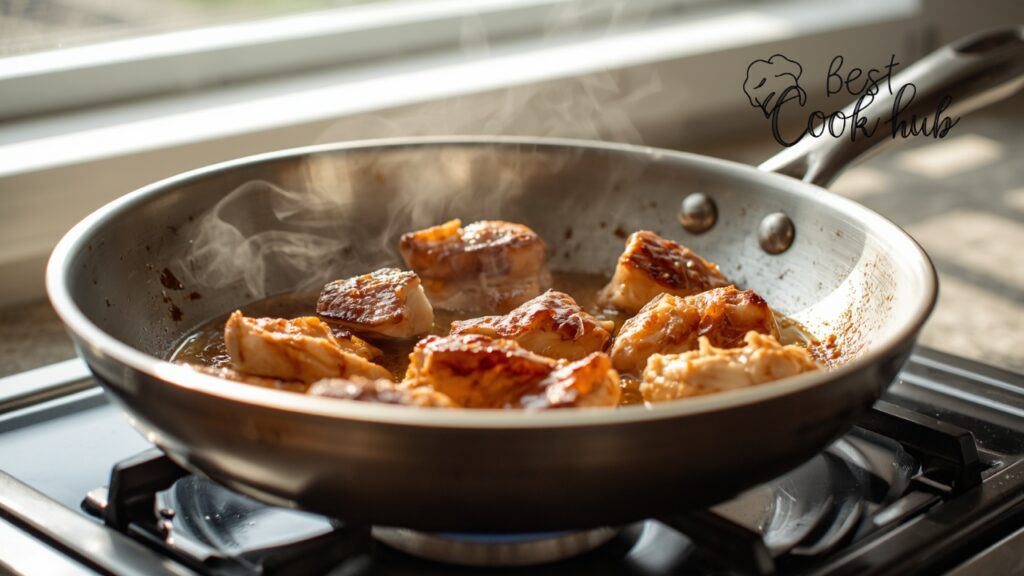
Let’s imagine two home cooks making the same meal: pan-seared chicken with onions and lemon butter sauce. Both use the same stove, same oil, same chicken, and same timing.
Cook A uses a thin regular stainless steel pan. Cook B uses a tri ply stainless steel pan.
After five minutes, Cook A sees dark browning in the center of the pan but pale areas near the edges. The onions brown unevenly, and the sauce needs more stirring to avoid scorching.
Cook B gets more balanced browning across the pan. The onions soften more evenly, and the sauce reduces smoothly.
The recipe did not change. The cookware changed.
This is why chefs care about pan construction. Better heat control gives better results.
Which One Is Better for Searing?
Tri ply stainless steel is usually better for searing. The aluminum core helps the pan heat evenly and recover heat after cold food is added.
When you place a cold steak or chicken breast into a pan, the pan temperature drops. A good tri ply pan handles that drop better than a thin stainless pan.
This matters because searing needs steady heat. If the heat drops too much, food steams instead of browns.
Have you ever put chicken in a pan and seen liquid pool around it? That often means the pan was not hot enough or lost heat too quickly.
Tri ply cookware helps create a stronger crust. That crust adds flavor, color, and texture.
Cooking tip: Pat meat dry before searing. Moisture blocks browning, no matter how good your pan is.
Which One Is Better for Vegetables?
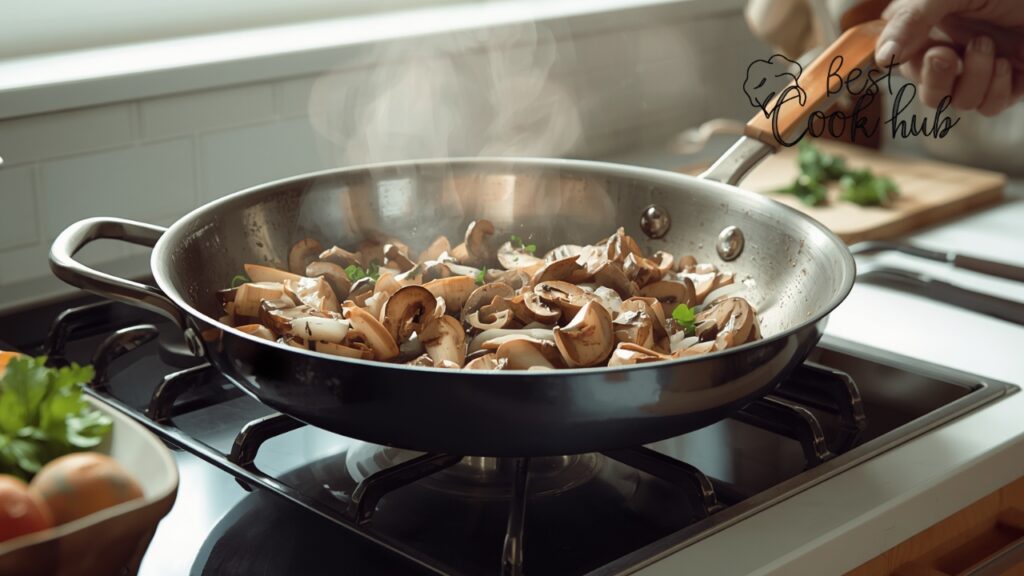
Tri ply stainless steel is usually better for sautéed vegetables. It spreads heat more evenly across the pan, helping onions, peppers, mushrooms, and zucchini cook consistently.
Regular stainless steel can still work for vegetables, especially in a thick-bottom pan. But if the pan has hot spots, garlic and onions may burn in some areas.
Do you love stir-fried vegetables with light browning? Tri ply cookware can help.
For mushrooms, use medium-high heat and avoid overcrowding. Mushrooms release water, and too much crowding turns sautéing into steaming.
For onions, medium heat is often enough. Tri ply cookware does not need extreme heat to work well.
Which One Is Better for Sauces?
Tri ply stainless steel is excellent for sauces. It heats the bottom and sides more evenly, which helps reduce scorching.
Regular stainless steel can make sauces too, but thin pans may create hot spots. Cream sauces, tomato sauces, and reductions can burn if heat is uneven.
Have you ever made a white sauce that stuck to the bottom? The pan may have been too thin or too hot.
Tri ply cookware is great for pan sauces because it creates fond. Fond is the browned layer left after searing meat or vegetables.
Add stock, wine, lemon juice, or water to the pan and scrape gently. That browned flavor becomes your sauce.
Cooking tip: After searing chicken, add minced shallot, then stock and lemon juice. Finish with a small knob of butter for a quick restaurant-style sauce.
Which One Is Better for Boiling and Steaming?
For boiling water, steaming vegetables, or cooking pasta, regular stainless steel can be enough. You do not always need tri ply construction for simple boiling.
A basic stainless steel stockpot can handle pasta, soup, and steamed vegetables well. The food is surrounded by water or steam, so heat distribution is less critical than in searing.
That said, tri ply pots can still be useful for thicker soups and stews. They help prevent scorching when food sits against the bottom.
If your budget is limited, buy a tri ply frying pan first. Then use regular stainless steel for stockpots and simple boiling tasks.
This is a smart way to build a cookware collection without overspending.
Which One Is Better for Eggs?
Eggs are tricky in any stainless steel pan. They love to stick if the pan is too cold, too hot, or not properly oiled.
Tri ply stainless steel can help because it heats more evenly. But technique matters more than material here.
Preheat the pan gently. Add butter or oil.
Let the fat coat the surface before adding eggs. Use medium-low heat for scrambled eggs and medium heat for fried eggs.
Have you ever tried to scrape eggs off stainless steel like glue? That usually means the heat or fat timing was wrong.
If you cook eggs every morning and want zero stress, keep a nonstick pan too. Good kitchens use different tools for different jobs.
Which One Is Better for Indian, Asian, and Everyday Home Cooking?
For Indian cooking, tri ply stainless steel is excellent for tadka, curry bases, sautéed onions, tomato masala, and thick sauces. It helps reduce burning during long cooking.
For Asian cooking, tri ply pans work well for stir-fried vegetables, fried rice, noodles, and pan-seared proteins. A wok is still great for high-heat tossing, but tri ply pans are useful for everyday meals.
For Western cooking, tri ply cookware is strong for steak, chicken, pork chops, pasta sauces, soups, and pan sauces.
Regular stainless steel is still useful for rice, boiling, steaming, and basic curries. But if you often cook masala, meat, or sauces, tri ply cookware gives better control.
Does your food often stick or burn at the bottom? A tri ply pan may solve part of the problem.
Safety: Is Tri Ply Stainless Steel Safer Than Regular Stainless Steel?
Both can be safe when made from good-quality food-grade stainless steel. The food touches stainless steel in both types.
Tri ply cookware usually has aluminum inside, but the aluminum is covered by stainless steel. That means the aluminum core does not directly touch food.
This gives you the heat benefit of aluminum without cooking on bare aluminum. That is one of the main reasons tri ply cookware is popular.
Regular stainless steel is also non-reactive and safe for acidic foods. The safety question is usually more about quality than the basic material.
Choose reputable cookware with clear material details. Avoid unknown products with vague descriptions.
Durability: Which One Lasts Longer?
Both tri ply stainless steel and regular stainless steel can last for years. Good stainless cookware is known for durability.
Tri ply cookware often feels stronger because of its bonded construction. It is designed for daily cooking, searing, deglazing, and oven use.
Regular stainless steel can also last long if it is thick and well-made. But very cheap thin stainless steel may dent, warp, or heat unevenly.
The biggest durability issue is not always the metal. It is how people use it.
Do not overheat an empty pan for too long. Do not shock a hot pan with cold water.
Do not use harsh cleaning methods every day. Treat the pan well, and it will reward you.
Cleaning: Is Tri Ply Harder to Clean?
Tri ply stainless steel and regular stainless steel clean in similar ways. The cooking surface is stainless steel, so the cleaning method is almost the same.
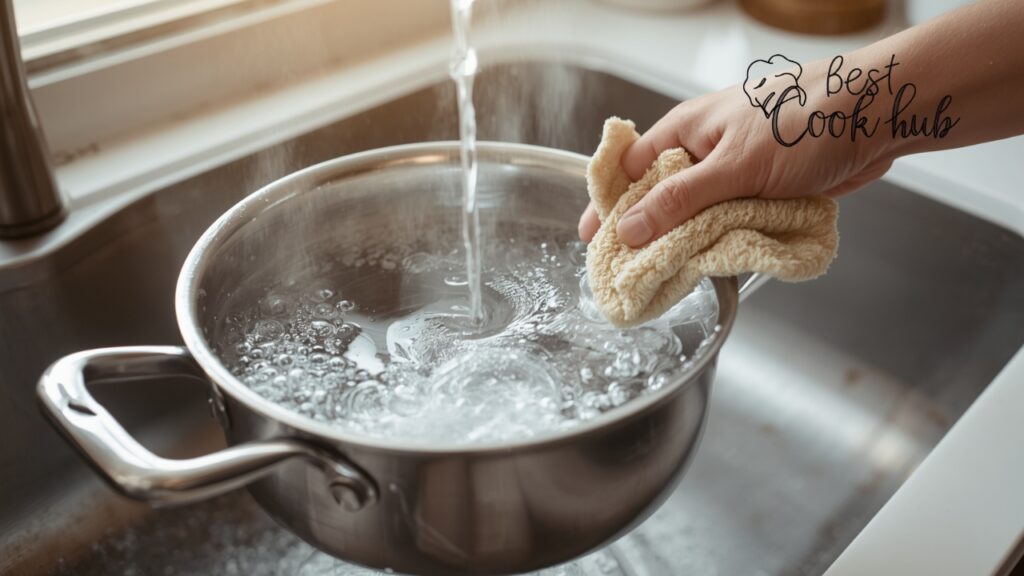
For normal cleaning, use warm water, dish soap, and a soft sponge. Dry the pan after washing to prevent water spots.
For stuck food, add water to the pan and simmer for a few minutes. The heat loosens the stuck bits.
For rainbow stains or white spots, use vinegar or a stainless steel cleaner. These marks are usually cosmetic.
Have you ever thought your stainless steel pan was ruined because it looked rainbow-colored? It probably was not ruined.
Stainless steel changes color sometimes with heat and minerals. A proper cleaner can make it look fresh again.
Price: Why Tri Ply Costs More
Tri ply stainless steel costs more because it is more complex to make. Manufacturers bond different metals together under pressure and heat.
That layered construction improves performance but increases production cost. You are paying for heat control, durability, and cooking consistency.
Regular stainless steel is often cheaper because it may use simpler construction. A single layer or disc-bottom design is easier to produce.
Should you always buy the expensive option? Not necessarily.
Spend more where performance matters most. A frying pan, sauté pan, and saucepan benefit from tri ply construction.
Save money on large stockpots if you mostly boil water or make thin soups. That balance gives you a smarter kitchen.
Weight and Handling
Tri ply stainless steel is usually heavier than thin stainless steel but lighter than cast iron. It should feel solid without feeling impossible to lift.
Regular stainless steel can be very light if it is thin. That may feel convenient at first, but it can also mean weaker heat performance.
When choosing cookware, lift the pan before buying if possible. Pretend to pour sauce or toss vegetables.
Does the handle feel balanced? Does the pan feel too heavy when empty?
A good pan should feel stable, not exhausting. Cooking should feel controlled, not like a workout.
Induction Compatibility
Many tri ply stainless steel pans work on induction because the outer stainless steel layer is magnetic. But not all stainless steel cookware is induction compatible.
Induction cooking needs magnetic material. Some stainless steel grades are not magnetic enough.
Before buying, check the product label. Look for “induction compatible” or an induction symbol.
You can also use a magnet test. If a magnet sticks firmly to the bottom, the pan may work on induction.
Have you ever bought a pan and later found it does not work on your cooktop? Always check before paying.
Oven Use
Many stainless steel and tri ply stainless steel pans can go in the oven, especially if they have metal handles. But oven safety depends on the product.
Plastic, silicone, or wooden handles may limit oven use. Glass lids may also have different heat limits.
Always check the manufacturer’s instructions. Do not guess with high oven temperatures.
Tri ply stainless steel is often used for stovetop-to-oven cooking. That makes it helpful for thick steaks, chicken thighs, frittatas, and baked pasta sauces.
Regular stainless steel may also work in the oven if built for it. The material is not the only factor; handle and lid design matter too.
How to Cook with Tri Ply Stainless Steel
Start by preheating the pan over medium heat. You do not need to use high heat all the time.
Add oil after the pan is hot. The oil should shimmer but not smoke heavily.
Add food and let it cook before moving it. This is especially important for meat and fish.
If food sticks, wait a little longer. Many proteins release naturally once browned.
Use deglazing to clean and flavor the pan. Add liquid and scrape the browned bits gently.
This is where tri ply cookware shines. It turns sticking into sauce when used correctly.
How to Cook with Regular Stainless Steel
Regular stainless steel needs more attention to heat control. Use medium heat first, especially if the pan is thin.
Preheat gently and avoid sudden high heat. Thin pans can develop hot spots quickly.
Use enough oil. A dry stainless steel pan is more likely to stick.
Stir sauces regularly to prevent scorching. Move food around more often if you notice uneven browning.
Regular stainless steel can still cook well. You just need to understand its limits.
The Water Drop Test
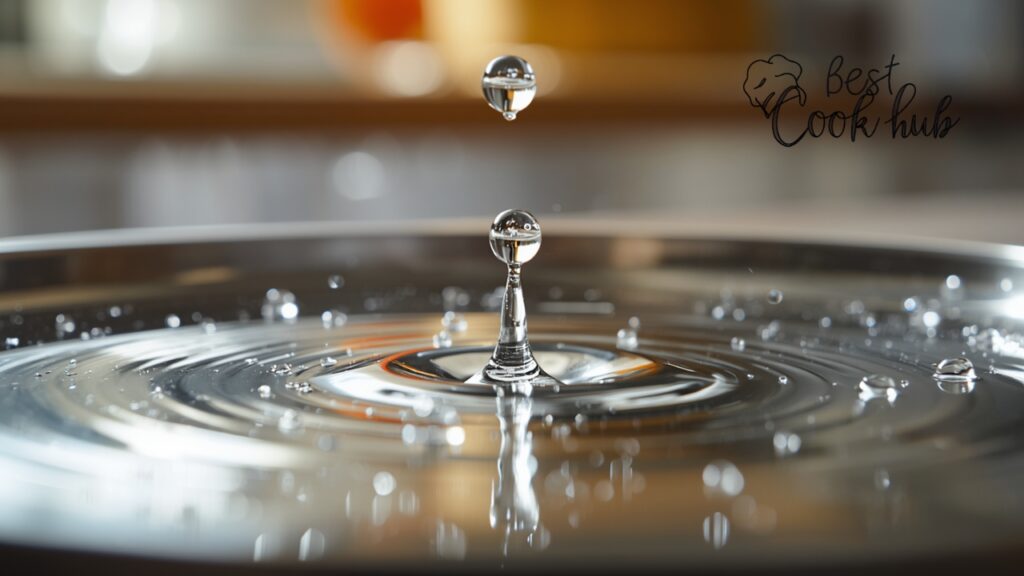
The water drop test helps you know when a stainless steel pan is hot enough. Add a few drops of water to the dry heated pan.
If the water disappears immediately, the pan may not be ready. If the drops form small balls and dance around, the pan is hot.
Then lower the heat slightly, add oil, and add food. This can help reduce sticking.
Do not overheat the pan until it smokes aggressively. That can burn oil and create bitter flavors.
Have you ever blamed the pan when food stuck? Sometimes the real issue is timing.
Best Uses for Tri Ply Stainless Steel
Tri ply stainless steel is best for searing steak, chicken, fish, and pork chops. It is also excellent for sautéing onions, mushrooms, peppers, and garlic.
Use it for pan sauces, tomato sauces, cream sauces, reductions, and curry bases. It handles acidic ingredients well.
It is also great for shallow frying, braising, simmering, and oven-finishing. A tri ply sauté pan can become one of the most-used pans in your kitchen.
If you cook daily, tri ply stainless steel gives you confidence. It makes heat feel more controlled.
Best Uses for Regular Stainless Steel
Regular stainless steel is best for boiling pasta, steaming vegetables, cooking rice, making broth, and preparing simple soups. It works well when food is mostly surrounded by liquid.
It can also be used for everyday cooking if the pan is thick enough. A good heavy-bottom stainless steel pot is still useful.
Use regular stainless steel when precision browning is not the main goal. It is practical, affordable, and long-lasting.
If you are building a budget kitchen, regular stainless steel can cover many basics. Then you can add one or two tri ply pieces later.
What Should You Buy First?
If you can buy only one premium piece, buy a tri ply stainless steel frying pan or sauté pan. That is where you will notice the biggest difference.
A frying pan handles eggs, chicken, fish, vegetables, and sauces. A sauté pan gives more depth for saucy meals and family cooking.
For stockpots, you can choose regular stainless steel if your budget is tight. Boiling pasta does not require the same performance as searing steak.
For saucepans, tri ply is useful if you make sauces, oatmeal, custards, or thick soups. It helps prevent scorching.
Does your cooking involve a lot of browning and sauce-making? Choose tri ply first.
Does your cooking involve mostly boiling and steaming? Regular stainless steel may be enough.
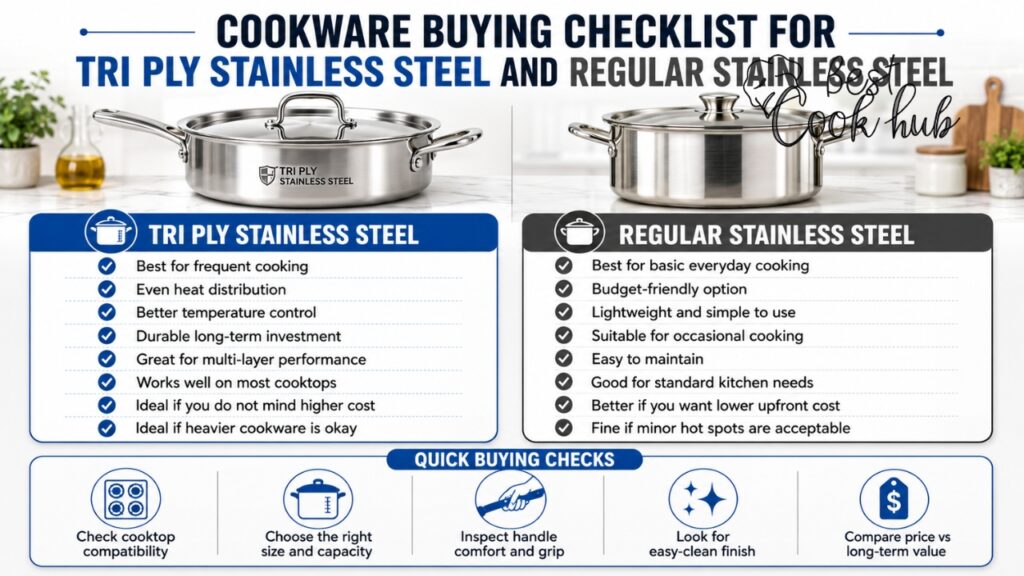
Buying Checklist
Look for full-clad construction if you want maximum heat distribution. Full-clad means the layers go up the sides, not just across the bottom.
Check the steel grade. 18/10 and 18/8 stainless steel are common in quality cookware.
Check the handle. It should feel secure and comfortable.
Check the weight. The pan should feel sturdy but manageable.
Check induction compatibility if needed. Do not assume every stainless steel pan works on induction.
Check oven-safe temperature. Handles and lids matter.
Read reviews that mention heat distribution, warping, cleaning, and sticking. These details reveal real performance.
Also check this: Difference Between Saucepan and Skillet
Common Myths About Tri Ply Stainless Steel vs Stainless Steel
Myth 1: Tri ply means nonstick.
Tri ply stainless steel is not nonstick. It still needs heat control, oil, and patience.
Myth 2: Regular stainless steel is bad.
Regular stainless steel is not bad. It is durable and useful, especially for boiling and simmering.
Myth 3: Heavier always means better.
Weight helps sometimes, but balance and construction matter more.
Myth 4: Stainless steel cannot cook eggs.
It can, but technique matters. Nonstick is easier, but stainless can work with practice.
Myth 5: More layers always mean better cookware.
A good tri ply pan can outperform a poorly made 5 ply pan. Quality matters more than layer count alone.
Simple Recipe Test: Try This at Home
Try cooking sliced onions in both pans if you own both. Use the same amount of oil, same heat level, and same cooking time.
Watch how evenly the onions soften and brown. Notice whether one area cooks faster than another.
Then try searing a small piece of chicken. Look at the crust.
This simple test teaches you more than any product label. Your stove, pan, and cooking style all work together.
Have you ever tested your cookware like this? It can completely change how you cook.
Final Verdict: Which One Is Better?
Tri ply stainless steel is better for most serious everyday cooking because it heats more evenly, reduces hot spots, and gives better control. It is the stronger choice for searing, sautéing, pan sauces, and thick dishes.
Regular stainless steel is still useful, especially for boiling, steaming, soups, and budget-friendly cookware needs. It is durable, non-reactive, and practical.
The smartest kitchen does not need only one type. It uses the right pan for the right job.
If you cook often, start with one good tri ply stainless steel pan. Then use regular stainless steel for simpler tasks.
That one upgrade can make your cooking feel calmer, cleaner, and more confident. And once your pan works with you instead of against you, cooking becomes much more enjoyable.
FAQ
Is tri ply stainless steel better than regular stainless steel?
Yes, tri ply stainless steel is usually better for cooking performance because it has an aluminum core that spreads heat more evenly. This helps reduce hot spots and improves browning.
Regular stainless steel is still useful for boiling, steaming, and simple cooking. The better choice depends on what you cook most often.
What is the main difference between tri ply and stainless steel?
The main difference is construction. Tri ply stainless steel has three bonded layers, usually stainless steel, aluminum, and stainless steel.
Regular stainless steel may be a single layer or may have only a thick base. It is durable, but it may not distribute heat as evenly.
Is tri ply stainless steel safe for cooking?
Yes, good-quality tri ply stainless steel is generally safe for everyday cooking. The food touches the stainless steel layer, not the aluminum core.
The stainless steel surface is non-reactive, so it works well with acidic ingredients like tomatoes, vinegar, lemon, and wine.
Does food stick more in stainless steel or tri ply stainless steel?
Food can stick in both if the pan is not preheated properly or if there is not enough oil. Tri ply stainless steel may be easier to manage because it heats more evenly.
Use medium heat, preheat the pan, add oil, and let food brown before moving it. This helps food release naturally.
Should I buy tri ply cookware or regular stainless steel cookware?
Buy tri ply cookware for frying pans, sauté pans, and saucepans if you cook regularly. These pieces benefit most from even heat.
Buy regular stainless steel for stockpots or simple boiling tasks if you want to save money. A mixed cookware setup is often the smartest choice.
Leave a Reply