The Day I Realized Knives Matter More Than Recipes
I remember when I helped a friend prepare dinner for twelve people. She had fresh vegetables, beautiful chicken, warm bread, and a recipe printed from a popular cooking site. But there was one problem. Every knife in her drawer was dull, mismatched, and wrong for the job. She tried slicing tomatoes with a thick chef’s knife, cutting bread with a smooth blade, and trimming chicken with a huge knife that felt unsafe. Does this sound familiar? After fifteen minutes, the tomatoes were crushed, the bread was torn, and the chicken prep felt stressful. The food was good, but the process was harder than it needed to be.
In my years of experience, I’ve seen many people struggle in the kitchen not because they lack talent, but because they use the wrong knife. A good knife does not just cut food; it gives you control, speed, safety, and confidence. Have you ever wondered why professional chefs seem so calm when chopping onions or slicing meat? Part of that confidence comes from knowing exactly which knife to use.
This guide will walk you through the most important types of kitchen knives and their uses. You’ll learn what each knife does, when to use it, what to avoid, and how to build a practical knife set without wasting money.
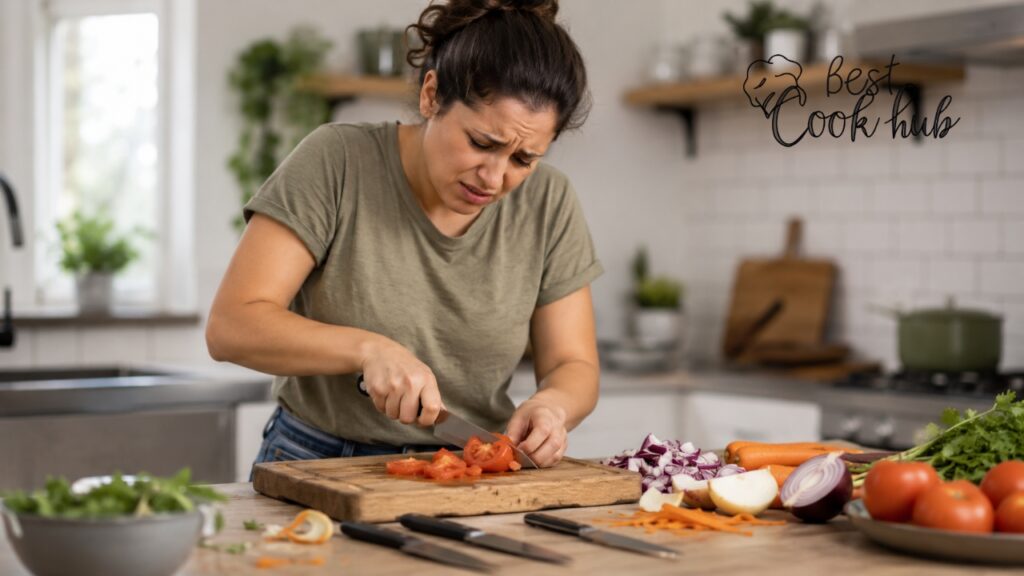
Why Understanding Kitchen Knives Matters
A kitchen knife is more than a sharp piece of steel. It is one of the most important cooking tools you will ever own. The right knife helps you cut cleaner, cook faster, and reduce accidents. The wrong knife can crush food, slow you down, and make simple prep feel frustrating.
Think about slicing a ripe tomato. A sharp serrated knife glides through the skin, while a dull knife presses the tomato flat. Think about carving roast chicken. A carving knife makes clean slices, while a short knife tears the meat. Think about peeling an apple. A small paring knife gives control, while a large chef’s knife feels awkward. That is why knowing kitchen knife types is so useful. Once you understand the purpose of each blade, cooking becomes smoother and more enjoyable.
The 3 Kitchen Knives Most Home Cooks Need First
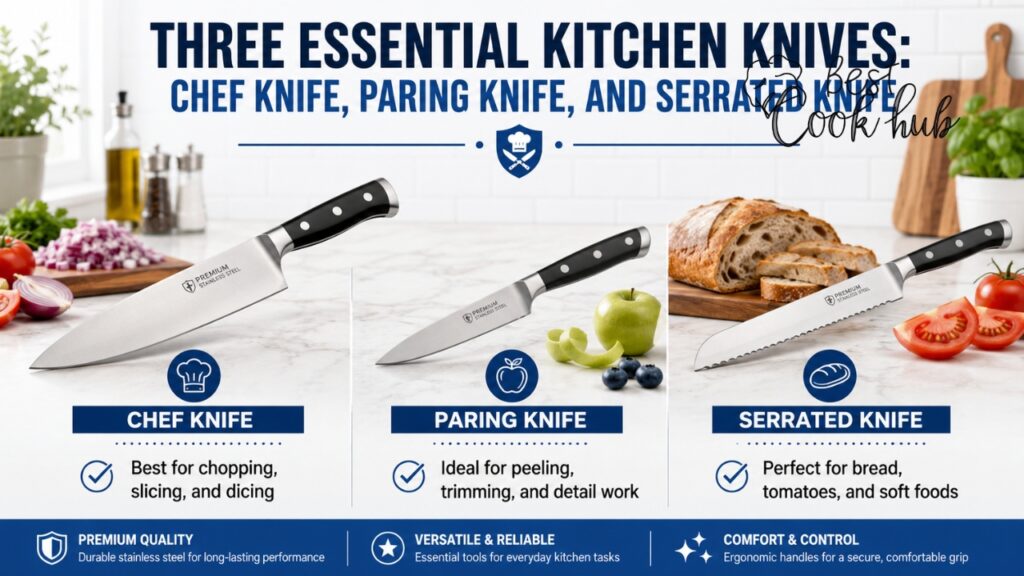
Before buying a huge knife block, start with the basics. Many expert cooking sources agree that most home cooks can do a lot with just a few essential knives. The first is a chef’s knife. This is your everyday workhorse. The second is a paring knife. This handles small, detailed prep. The third is a serrated bread knife. This slices bread, tomatoes, cakes, and foods with tough skins or soft centers.
Do you really need fifteen knives on day one? No. A small set of useful, sharp knives is better than a big block of knives you never touch. Start simple, then add specialty knives when your cooking style demands them.
1. Chef’s Knife: The Everyday Workhorse
The chef’s knife is the most important knife in many kitchens. It usually has a broad blade, pointed tip, and curved edge.
Most chef’s knives are around 8 inches long, though you can find 6-inch and 10-inch versions too. For beginners, an 8-inch chef’s knife is usually the best balance of control and power. Use a chef’s knife for chopping onions, slicing carrots, mincing garlic, cutting herbs, dicing potatoes, and breaking down large vegetables. It is also useful for slicing boneless meat.
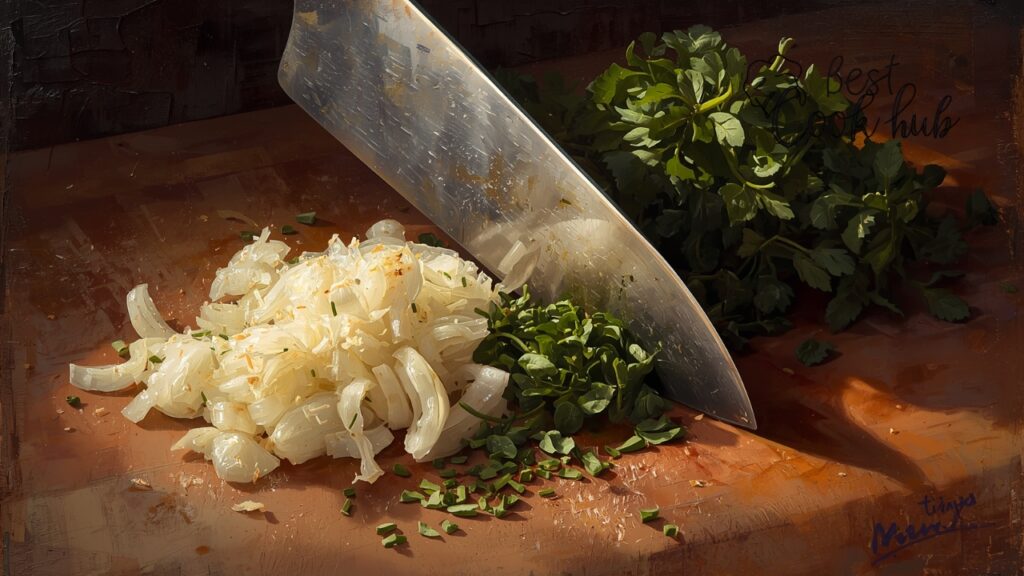
Have you ever tried chopping cabbage with a tiny knife? It takes forever and feels unsafe. A chef’s knife gives enough length and weight to handle big prep jobs. It also lets you use a rocking motion for herbs and a push cut for vegetables.
Best uses: onions, garlic, herbs, carrots, potatoes, peppers, cabbage, squash, boneless meat, and general meal prep.
Avoid using it for: bones, frozen food, hard shells, and delicate peeling tasks.
Cooking tip: Keep the tip of the knife close to the cutting board when mincing herbs. Rock the blade gently instead of smashing the herbs.
2. Santoku Knife: The Lightweight All-Purpose Cutter
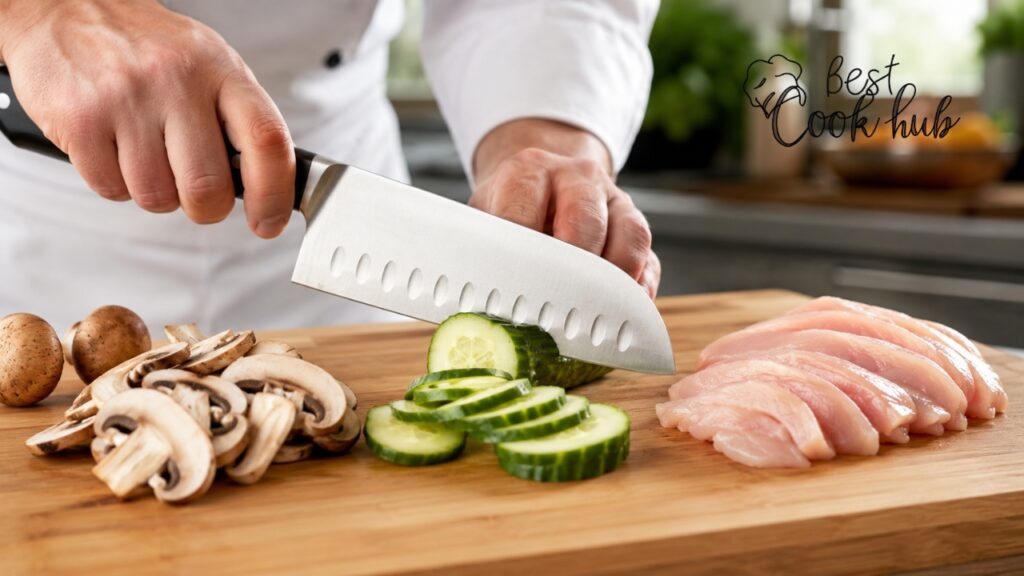
The santoku knife is a Japanese-style all-purpose kitchen knife. It is shorter and lighter than many chef’s knives. Santoku usually means “three virtues” or “three uses.” Many cooks understand this as slicing, dicing, and mincing. A santoku is often around 5 to 7 inches long. It has a flatter cutting edge and a rounded sheepsfoot-style tip.
Do you prefer a smaller knife that feels easy to control? Then a santoku may suit you better than a large chef’s knife. Use it for vegetables, fish, cooked meat, cheese, herbs, and everyday prep. It is especially good for clean, straight cuts. Some santoku knives have small hollow dimples along the blade. These are called granton edges, and they can help reduce food sticking to the blade.
Best uses: slicing vegetables, dicing onions, mincing garlic, cutting fish fillets, slicing cheese, and preparing quick meals.
Avoid using it for: bones, frozen food, large squash, and heavy chopping.
Cooking tip: Use a forward-and-down push cut with a santoku. It is not designed for heavy rocking like some Western chef’s knives.
3. Paring Knife: The Small Detail Knife
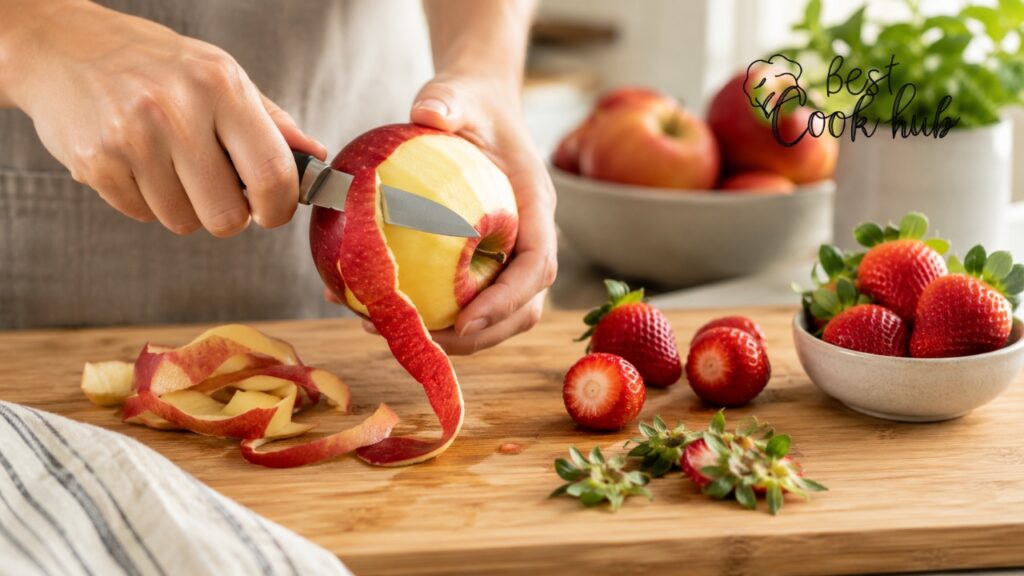
A paring knife is small, sharp, and easy to control. It usually has a blade around 3 to 4 inches long. This knife is perfect for jobs that feel too small for a chef’s knife. Think peeling apples, trimming strawberries, deveining shrimp, and removing seeds.
Have you ever tried removing the top of a strawberry with a large knife? It feels clumsy and wasteful. A paring knife gives you precision. It works close to the hand, so you can make small cuts safely. Use it for fruit, small vegetables, garnishes, and delicate trimming. It is one of the most useful knives for everyday home cooking.
Best uses: peeling fruit, trimming vegetables, coring tomatoes, hulling strawberries, cutting small garnishes, and deveining shrimp.
Avoid using it for: large vegetables, thick meat, bones, and hard squash.
Cooking tip: For safer peeling, keep the blade moving slowly and turn the food instead of forcing the knife forward.
4. Serrated Bread Knife: The Saw-Tooth Slicer
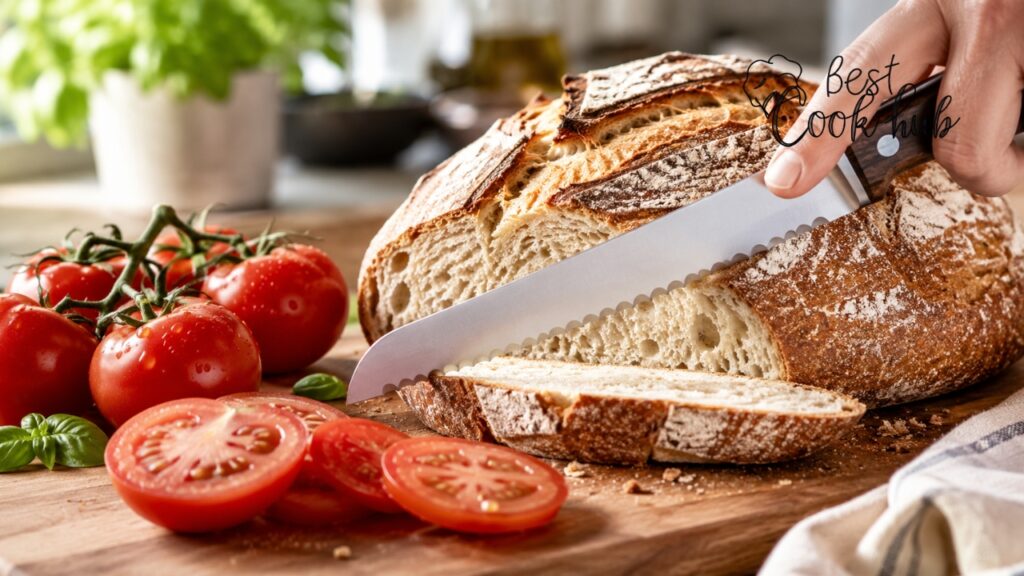
A serrated bread knife has a long blade with tooth-like edges. It works like a small saw. This knife is famous for slicing bread, but it does much more. It also cuts tomatoes, citrus, cakes, sandwiches, and soft fruits with tough skins.
Have you ever crushed a loaf of bread while trying to slice it? That usually happens when you use a smooth-edged knife. The serrated edge grips the crust and cuts through without heavy pressure. That means the soft inside stays fluffy. A good bread knife is usually 8 to 10 inches long. The longer blade helps you cut across wide loaves with fewer strokes.
Best uses: crusty bread, sandwich bread, tomatoes, citrus, cakes, pastries, eggplant, pineapple, and soft fruits.
Avoid using it for: chopping herbs, cutting raw meat, peeling fruit, and precise vegetable cuts.
Cooking tip: Let the serrations do the work. Use a gentle sawing motion instead of pressing down hard.
5. Utility Knife: The Middle-Sized Helper
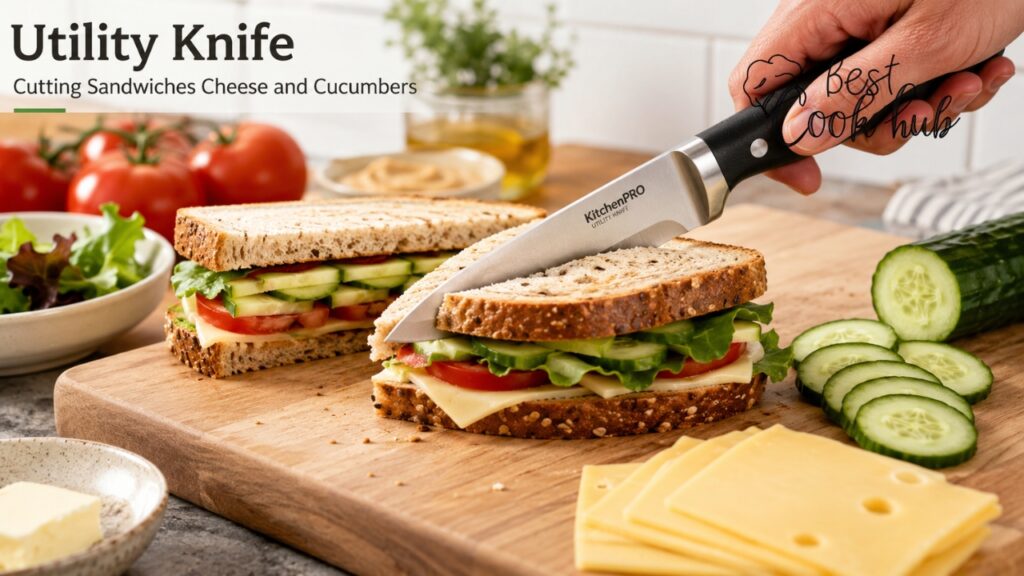
A utility knife sits between a chef’s knife and a paring knife. It is usually around 4 to 7 inches long. This knife is useful when a chef’s knife feels too big but a paring knife feels too small. It is a handy everyday helper.
Use it for slicing sandwiches, cutting small blocks of cheese, trimming vegetables, slicing fruit, and preparing lunch ingredients. Does your chef’s knife ever feel too large for quick snacks? A utility knife fills that gap. Some utility knives are straight-edged, while others are serrated. A serrated utility knife is especially nice for tomatoes, rolls, and small sandwiches.
Best uses: sandwiches, small fruits, cheese, cucumbers, tomatoes, sausages, and quick prep jobs.
Avoid using it for: heavy chopping, bones, large vegetables, and fine peeling.
Cooking tip: Keep a utility knife nearby for fast meal prep. It saves time when you do not want to pull out your large chef’s knife.
6. Boning Knife: The Meat and Fish Specialist
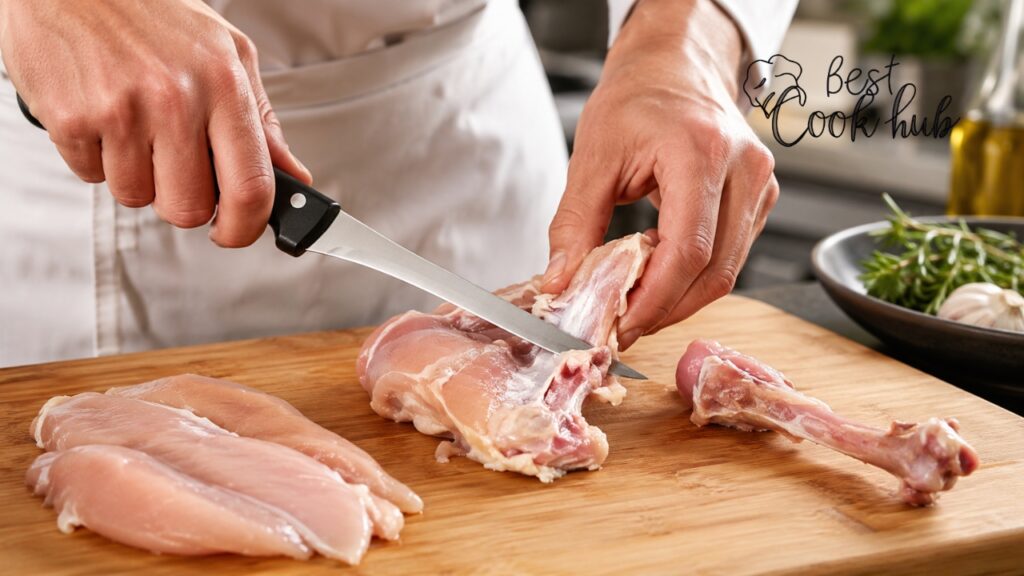
A boning knife has a narrow blade designed to separate meat from bone. It may be flexible or stiff depending on the style. Flexible boning knives are useful for fish and delicate work. Stiffer boning knives are better for beef, pork, and poultry.
Have you ever wasted meat while cutting around bones? A boning knife helps you follow the shape of the bone closely. Use it for deboning chicken thighs, trimming silver skin, filleting fish, and preparing cuts of meat. It gives better control than a chef’s knife for these tasks. A typical boning knife is around 5 to 7 inches long. The pointed tip helps you work into joints and tight spaces.
Best uses: deboning chicken, trimming meat, filleting fish, removing silver skin, and cutting around joints.
Avoid using it for: chopping bones, cutting frozen meat, slicing bread, and general vegetable prep.
Cooking tip: Use short, controlled strokes. Let the blade follow the bone instead of forcing it through the meat.
7. Fillet Knife: The Flexible Fish Knife
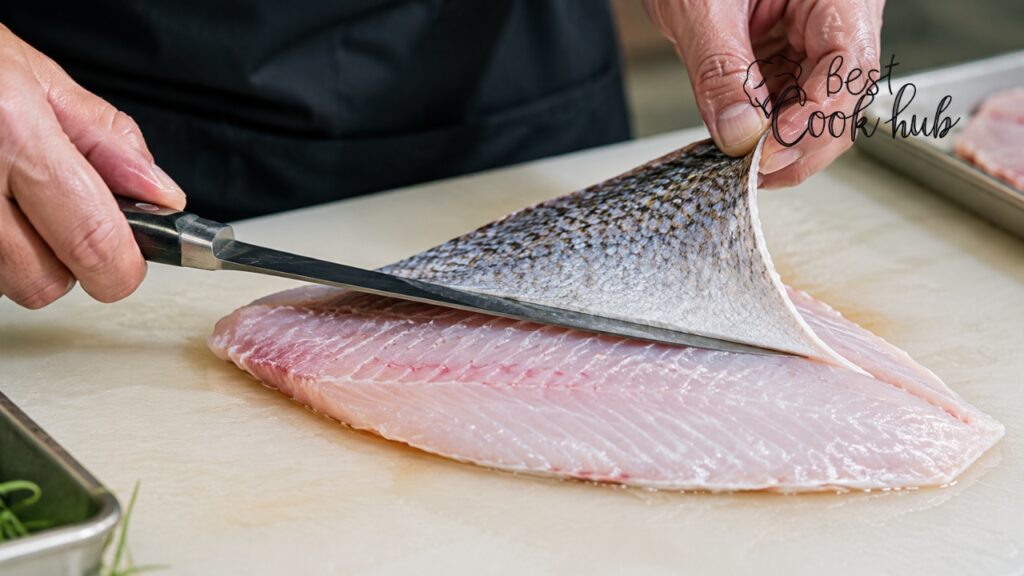
A fillet knife is similar to a boning knife, but it is usually thinner and more flexible. It is designed for fish. The flexible blade helps glide along the backbone and under the skin. This gives clean fillets with less waste.
Do you cook whole fish at home? A fillet knife can make the job much easier. Use it for salmon, trout, snapper, tilapia, and other fish. It is also helpful for removing fish skin. A fillet knife is not meant for heavy meat trimming. It is a precision tool.
Best uses: filleting fish, skinning fish, trimming delicate seafood, and thin fish cuts.
Avoid using it for: hard vegetables, meat bones, frozen fish, and heavy chopping.
Cooking tip: Keep the blade almost flat when removing fish skin. Hold the skin firmly and slide the knife forward with gentle pressure.
8. Carving Knife: The Roast Dinner Knife
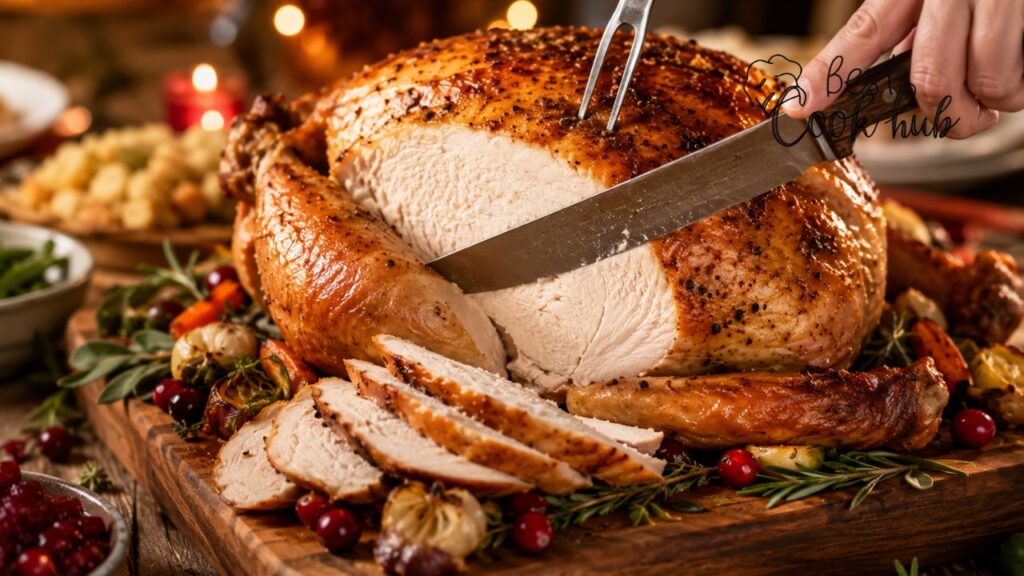
A carving knife is long, narrow, and designed for slicing cooked meat. It creates neat slices without tearing. Use it for roast chicken, turkey, ham, roast beef, lamb, and large cooked meats. It is especially useful for holiday meals.
Have you ever cooked a beautiful roast and then ruined the presentation while slicing it? A carving knife helps prevent that. The narrow blade reduces drag. That means smoother slices and cleaner plating. A carving knife is usually 8 to 14 inches long. The right length depends on the size of the meat you usually cook.
Best uses: turkey, roast chicken, ham, roast beef, lamb, brisket, and cooked meat slices.
Avoid using it for: chopping vegetables, cutting bones, peeling fruit, and mincing herbs.
Cooking tip: Let roasted meat rest before carving. Resting helps juices redistribute, so the meat slices cleaner and stays juicier.
9. Slicing Knife: The Clean Presentation Knife
A slicing knife looks similar to a carving knife, but it is often even narrower and sometimes longer. It is designed for thin, smooth slices. Use it for brisket, smoked salmon, roasts, turkey breast, ham, and delicate cooked proteins. It is great when presentation matters. Some slicing knives have rounded tips. Others have granton edges to reduce sticking.
Have you ever wanted restaurant-style meat slices at home? A slicing knife can help. It is not a daily essential for everyone, but it is valuable if you cook roasts often.
Best uses: smoked meats, turkey breast, roast beef, ham, salmon, and thin protein slices.
Avoid using it for: chopping, bones, hard vegetables, and small prep tasks.
Cooking tip: Use long strokes from heel to tip. Avoid sawing back and forth unless the knife is serrated.
10. Cleaver: The Heavy-Duty Chopper
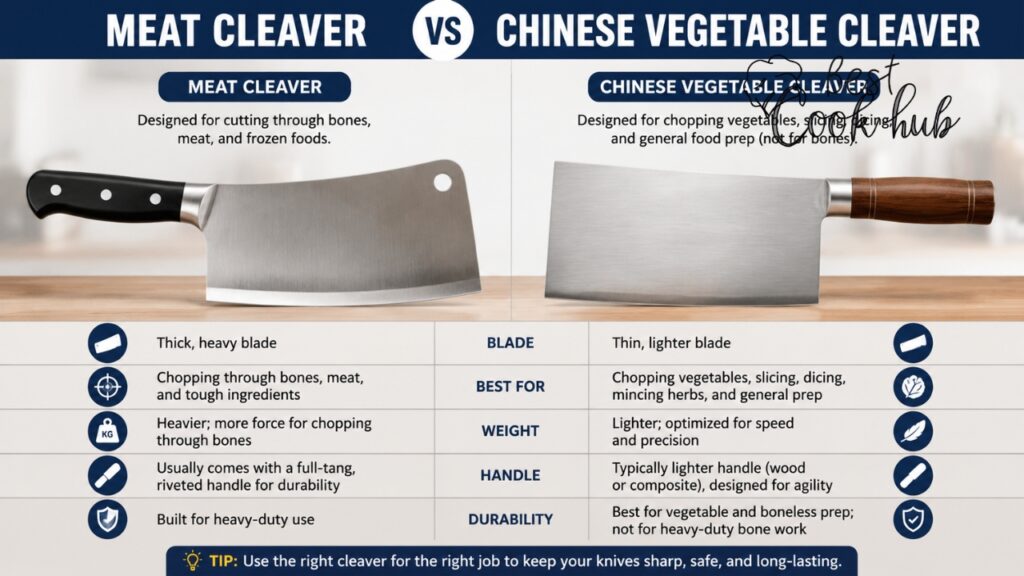
A cleaver is a large rectangular knife. It is often heavy and powerful. There are different types of cleavers. A meat cleaver is thick and heavy for chopping through bones, while a Chinese vegetable cleaver is thinner and used for slicing vegetables and boneless meat. This difference matters a lot. Do not assume every cleaver is made for bones.
Have you ever seen a chef scoop chopped vegetables with a wide blade? That is often done with a Chinese-style cleaver. A meat cleaver can handle poultry bones, ribs, and tough cuts. A vegetable cleaver is better for cabbage, onions, garlic, and boneless proteins.
Best uses: meat cleaver for bones and joints; vegetable cleaver for vegetables, herbs, and boneless meat.
Avoid using it for: delicate peeling, small garnishes, and tasks that need tiny detail cuts.
Cooking tip: Use a stable cutting board when using a cleaver. Never swing wildly; controlled power is safer than force.
11. Nakiri Knife: The Vegetable Lover’s Blade
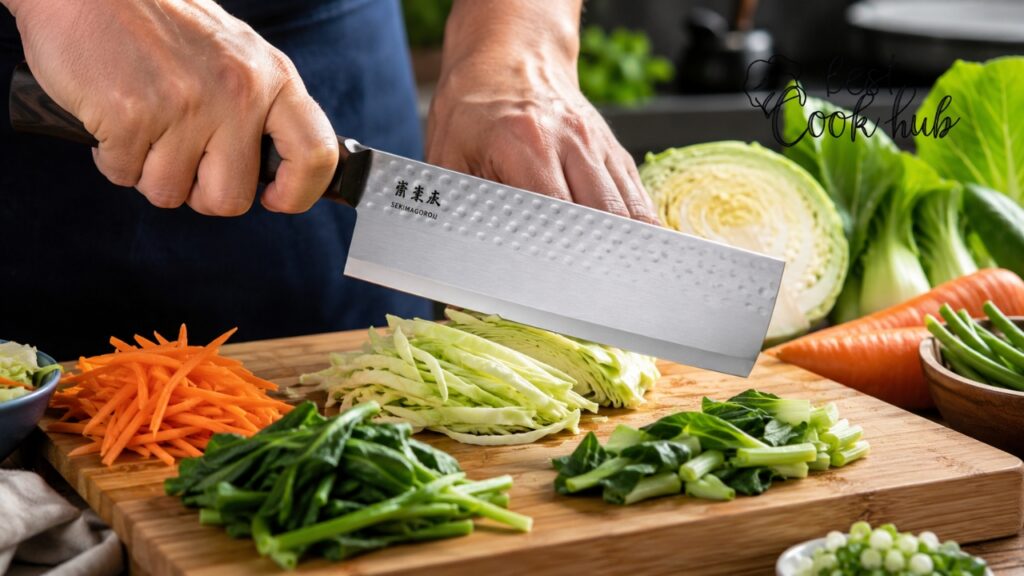
A nakiri is a Japanese vegetable knife with a rectangular blade and straight edge. It looks like a small cleaver, but it is not for bones. The flat edge makes full contact with the cutting board. This helps you cut vegetables cleanly without leaving pieces attached.
Do you prepare lots of vegetables for stir-fries, salads, curries, or meal prep? A nakiri can become your favorite knife. Use it for carrots, cucumbers, cabbage, onions, zucchini, eggplant, and leafy greens. It is especially satisfying for straight, clean cuts. The wide blade can also help move chopped vegetables from the board to the pan.
Best uses: vegetables, herbs, leafy greens, cabbage, onions, cucumbers, and plant-based meal prep.
Avoid using it for: bones, frozen food, hard squash, and meat butchery.
Cooking tip: Use an up-and-down chopping motion or a gentle push cut. A nakiri is not designed for aggressive rocking.
12. Steak Knife: The Table Knife for Cooked Meat
Steak knives are used at the table, not usually for food prep. They are designed to cut cooked steak, chicken, pork, and other plated foods. Some steak knives are serrated, while others have straight edges. Serrated steak knives stay useful longer without sharpening, but straight-edge steak knives can cut more cleanly when sharp.
Have you ever served steak and watched someone fight with a dull table knife? A good steak knife makes the meal feel better. Steak knives are not a replacement for chef’s knives or carving knives. They are finishing knives for eating.
Best uses: cooked steak, grilled chicken, pork chops, sausages, and firm plated foods.
Avoid using them for: kitchen prep, chopping vegetables, cutting raw meat, and opening packaging.
Cooking tip: If you serve steak often, choose steak knives that feel comfortable in the hand. The dining experience matters too.
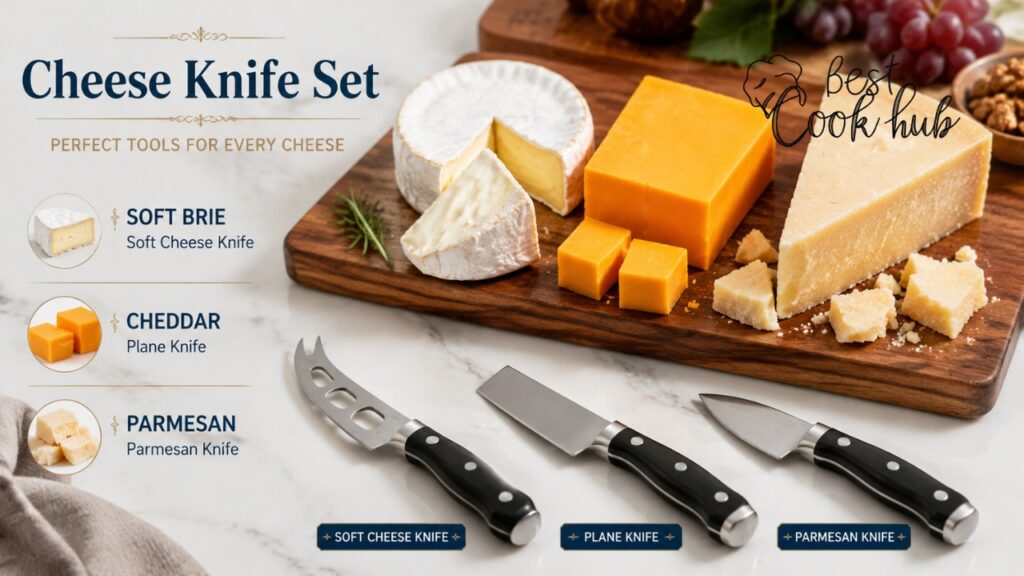
13. Cheese Knife: The Knife for Soft and Hard Cheese
Cheese knives come in several styles. Soft cheese knives often have holes in the blade to reduce sticking. Hard cheese knives may be shorter, stronger, and sometimes shaped like small spades. Cheese planes and cheese wires are also common.
Have you ever tried cutting brie with a regular knife and watched it smear everywhere? A soft cheese knife helps keep slices cleaner. Use different cheese knives for brie, cheddar, parmesan, gouda, and blue cheese. The texture of the cheese decides the tool.
Best uses: cheese boards, soft cheese, hard cheese, semi-soft cheese, and entertaining.
Avoid using them for: meat, vegetables, bread, and general cooking prep.
Cooking tip: Let cheese sit at room temperature for a short time before serving. It cuts better and tastes richer.
14. Tomato Knife: The Small Serrated Specialist
A tomato knife is a small serrated knife designed for slicing tomatoes and soft fruits. It often has a forked tip for lifting slices. It is not essential if you already own a good serrated bread knife. But it is useful if you slice tomatoes often.
Tomato skin is thin but surprisingly tough. A smooth dull blade crushes it quickly. A serrated tomato knife grips the skin and cuts without squashing the juicy center. That is why it is helpful for salads, sandwiches, and garnishes.
Best uses: tomatoes, kiwi, citrus, plums, small rolls, and soft fruits.
Avoid using it for: hard vegetables, raw meat, bones, and peeling.
Cooking tip: Slice tomatoes with light pressure. If you press too hard, even a serrated knife can crush the flesh.
15. Butcher Knife: The Large Meat Prep Knife
A butcher knife is designed for breaking down large pieces of meat. It often has a curved blade and strong build. Butchers use it for trimming, portioning, and cutting large cuts into smaller pieces. It is more specialized than a chef’s knife.
Do most home cooks need one? Not always. If you buy large cuts of meat, process game, or prepare barbecue regularly, a butcher knife may be useful. If not, a chef’s knife and boning knife may be enough.
Best uses: large meat cuts, trimming fat, portioning meat, barbecue prep, and butchery.
Avoid using it for: small vegetable prep, bread, fruit, and delicate cuts.
Cooking tip: Keep meat cold but not frozen when trimming. Cold meat is firmer and easier to cut cleanly.
16. Meat Slicer or Electric Knife: The Convenience Cutter
An electric knife uses moving serrated blades to slice food with less effort. Many people use it for turkey, roasts, bread, and large sandwiches. It is not an everyday essential, but it can be helpful for holidays or big family meals.
Have you ever carved a turkey while everyone waited at the table? An electric knife can speed things up. Still, it does not replace good knife skills. It is a convenience tool.
Best uses: turkey, roast meat, bread, large sandwiches, and holiday meals.
Avoid using it for: small prep tasks, vegetables, peeling, and delicate garnishes.
Cooking tip: Let the blade move at its own pace. Do not force it through the food.
17. Kitchen Shears: Not a Knife, But Still Essential
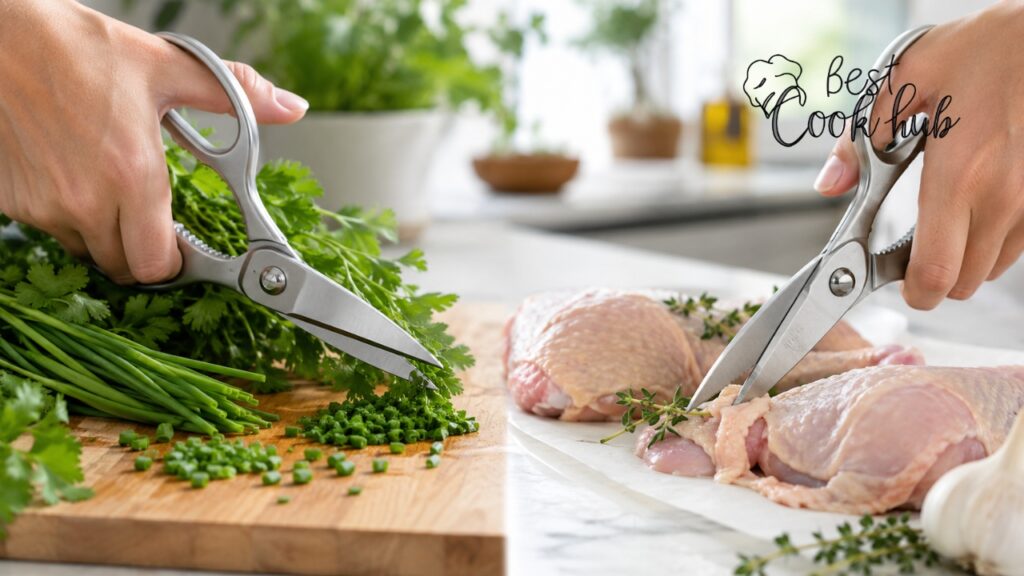
Kitchen shears are not technically knives, but they belong in every practical kitchen. They are powerful, safe, and fast for many tasks. Use them for cutting herbs, trimming poultry, snipping bacon, opening food packages, cutting pizza, and portioning flatbread.
Have you ever tried cutting herbs with a dull knife and bruised them badly? Shears can make quick work of small herb jobs. Choose kitchen shears that come apart for cleaning. This is important for food safety.
Best uses: herbs, poultry trimming, packaging, bacon, pizza, flatbread, and quick cuts.
Avoid using them for: heavy bones unless the shears are designed for poultry, and tasks needing very clean presentation.
Cooking tip: Wash shears carefully after cutting raw poultry. Clean between the blades, not just the outside.
Knife Uses by Cooking Task
If you are chopping vegetables, use a chef’s knife, santoku, or nakiri. These give control and speed. If you are peeling fruit, use a paring knife. It gives close control. If you are slicing bread, use a serrated bread knife. It protects the soft crumb. If you are cutting tomatoes, use a serrated knife or very sharp chef’s knife. Serrated is easier for beginners. If you are deboning chicken, use a boning knife. It follows bones better. If you are filleting fish, use a fillet knife. The flexible blade helps reduce waste. If you are carving turkey, use a carving knife or slicing knife. Long blades give cleaner slices. If you are chopping bones, use a meat cleaver. Do not use thin chef’s knives for bones.
Knife Skills That Make Every Knife Work Better
The first skill is the claw grip. Curl your fingertips under and guide the food with your knuckles. This keeps fingertips away from the blade. It may feel strange at first, but it becomes natural with practice. The second skill is the pinch grip. Hold the knife handle while pinching the blade near the handle with your thumb and index finger. This gives better control than holding the handle far back. Have you ever felt like your knife was wobbling? The pinch grip helps.
The third skill is using the right motion. Chef’s knives can rock, santoku knives often push cut, and serrated knives saw gently. The fourth skill is keeping your board stable. Place a damp towel under the cutting board to stop it sliding. A moving cutting board is dangerous. A stable board makes every cut easier.
Basic Knife Cuts Every Cook Should Know
A slice is a flat cut. Use it for tomatoes, onions, cucumbers, and meat. A dice is a cube cut. Use it for onions, carrots, potatoes, and peppers. A mince is a very fine cut. Use it for garlic, herbs, ginger, and shallots. A julienne is a thin matchstick cut. Use it for carrots, peppers, zucchini, and stir-fry vegetables. A chiffonade is a ribbon cut for leafy herbs and greens. Roll basil or spinach, then slice thinly.
Do you need to master all these cuts today? No. Start with slicing, dicing, and mincing. Those three will improve most everyday meals.
Knife Safety Tips Every Home Cook Should Follow
A sharp knife is safer than a dull knife. A dull knife slips because it needs more pressure. Always cut on a stable board. Never cut food while holding it in the air unless you are using a small paring knife with care. Keep your eyes on the blade. Distraction causes accidents.
Never put knives loose in a sink full of water. Someone can reach in and get cut. Carry a knife with the tip down and blade facing backward. Tell people when you are walking behind them in a busy kitchen. Use separate cutting boards for raw meat and ready-to-eat foods when possible. This helps reduce cross-contamination.
How to Clean and Store Kitchen Knives
Wash knives by hand with warm water and mild dish soap. Dry them immediately with a towel. Avoid putting good kitchen knives in the dishwasher. Heat, detergent, and movement can damage handles and dull blades. Store knives in a knife block, magnetic strip, drawer insert, knife roll, or blade guard. Do not let blades bang against other utensils.
Have you ever opened a drawer and heard knives scraping together? That sound means the edges are getting damaged. Good storage protects both the knife and your hands.
Honing vs Sharpening: What Is the Difference?
Honing realigns the edge of the knife. It does not remove much metal. Sharpening creates a new edge by removing metal. This is done with a whetstone, sharpening system, or professional service.
Many home cooks confuse the two. Does your honing steel make a dead-dull knife sharp again? Not really. Use a honing steel regularly to maintain the edge. Sharpen when the knife no longer cuts cleanly. A simple test is the tomato test. If your knife crushes tomato skin instead of slicing it, it needs attention.
You can also check this: How Long Do Knife Sharpeners Last?
How to Choose the Best Kitchen Knife for Your Hand
The best kitchen knife is not always the most expensive one. It is the one that feels balanced, comfortable, and safe in your hand. Hold the knife before buying if possible. The handle should not feel slippery or awkward.
Check the weight. Some cooks love heavy German-style knives, while others prefer lighter Japanese-style knives. Look for a full tang if you want strength and balance. A full tang means the metal runs through the handle. Choose steel that matches your maintenance habits. Stainless steel is easier to care for, while carbon steel can get very sharp but needs more attention.
Ask yourself one simple question: will I enjoy using this knife every day?
Best Beginner Knife Set Recommendation
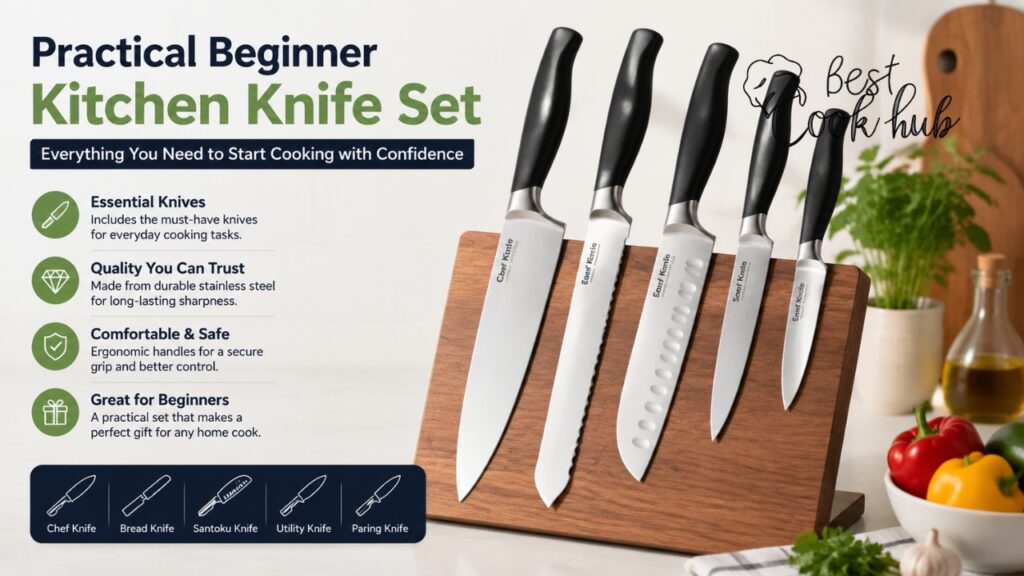
For most beginners, start with four tools. Buy a chef’s knife, paring knife, serrated bread knife, and kitchen shears. If you cook lots of vegetables, add a nakiri or santoku. If you cook meat often, add a boning knife. If you host holiday dinners, add a carving knife. If you love fish, add a fillet knife.
Avoid buying a large knife set just because it looks complete. Many sets include knives you may never use. A small set of high-quality knives will serve you better than a huge set of average blades.
Quick Comparison Table: Types of Kitchen Knives and Their Uses
| Knife Type | Best Uses | Beginner Friendly? |
| Chef’s Knife | Chopping, slicing, mincing, general prep | Yes |
| Santoku Knife | Slicing, dicing, mincing, vegetables, fish | Yes |
| Paring Knife | Peeling, trimming, small detail work | Yes |
| Serrated Bread Knife | Bread, tomatoes, cakes, citrus | Yes |
| Utility Knife | Sandwiches, fruit, cheese, small prep | Yes |
| Boning Knife | Meat trimming, deboning poultry | Medium |
| Fillet Knife | Fish filleting and skinning | Medium |
| Carving Knife | Turkey, roast, ham, cooked meats | Yes |
| Slicing Knife | Thin meat slices, brisket, salmon | Yes |
| Cleaver | Bones or vegetable chopping, depending on type | Medium |
| Nakiri Knife | Vegetables and leafy greens | Yes |
| Steak Knife | Eating cooked meat at the table | Yes |
| Cheese Knife | Cutting different cheese textures | Yes |
| Tomato Knife | Tomatoes and soft fruits | Yes |
| Butcher Knife | Large meat cuts and butchery | Advanced |
| Electric Knife | Turkey, roasts, bread, holiday meals | Yes |
| Kitchen Shears | Herbs, poultry trimming, packaging | Yes |
Common Knife Mistakes to Avoid
The first mistake is using one knife for everything. A chef’s knife is versatile, but it cannot do every job perfectly. The second mistake is using a dull knife. Dull knives make cooking slower and less safe. The third mistake is cutting on glass or stone boards. These surfaces damage knife edges quickly. The fourth mistake is twisting the blade. This can chip or bend the edge. The fifth mistake is scraping food with the sharp side of the blade. Use the spine of the knife instead. The sixth mistake is storing knives loose in a drawer. This dulls the blade and increases injury risk.
Cooking Confidence Comes from the Right Knife
Cooking feels easier when your tools match your task. That is the real secret behind kitchen knives. You do not need to become a professional chef to use knives properly. You only need to understand the basic types and practice a little. Start with the essential three: chef’s knife, paring knife, and serrated bread knife. Then add knives based on your cooking habits.
If you cook vegetables every day, add a nakiri or santoku. If you cook meat often, add a boning knife. If you bake bread or make sandwiches, keep a good serrated knife close. If you host big dinners, a carving knife will make serving easier. The right knife saves time, improves food texture, and helps you enjoy the cooking process. Once you feel that difference, you will never look at your knife drawer the same way again.
FAQ
What are the three most important kitchen knives?
A chef’s knife handles chopping and slicing. A paring knife handles small detail work, and a serrated knife handles bread, tomatoes, and soft foods with tough skins.
What is the most useful kitchen knife?
For many home cooks, an 8-inch chef’s knife is the best starting point. It gives a good balance of size, power, and control.
What knife should I use to cut vegetables?
For small vegetables or peeling, use a paring knife. The right choice depends on the size and shape of the ingredient.
What knife is best for cutting meat?
For large meat cuts, a butcher knife may be useful. For bones, use a proper meat cleaver instead of a thin chef’s knife.
How often should kitchen knives be sharpened?
Hone your knife regularly to maintain the edge. Sharpen it when it starts crushing food instead of cutting cleanly.
Leave a Reply